

The Moon’s Gandanta:
Understanding the Cosmic Knot
A Comprehensive Guide to This Sacred Threshold
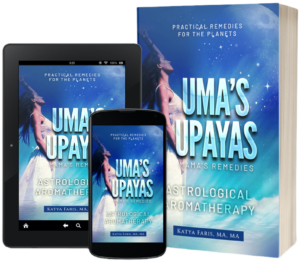
Uma’s Upayas Astrological Aromatherapy on Amazon & FREE on Kindle
FREE SIDEREAL CHART CALCULATOR
Have you ever had a day where everything feels… off? Where emotions surge without warning, old patterns resurface, and you feel caught between two worlds, unable to fully land in either? You may have been navigating the Moon’s Gandanta—one of the most subtle yet powerful thresholds in Vedic Astrology.
The word Gandanta means “the knot at the end”—a spiritual knot that is difficult to untangle. It is the sacred junction where a water sign meets a fire sign, and more specifically, where certain nakshatras (lunar mansions) transition into the next. These are the points where the soul stands between two worlds, one emotional life closing before the next has properly opened. As one sage beautifully put it, a well-tied knot is very difficult to unravel—the more you try, the tighter it becomes.
What is a Gandanta?
In Vedic Astrology, Gandanta occurs at three specific junctions in the zodiac where a water sign (Pisces, Cancer, Scorpio) meets a fire sign (Aries, Leo, Sagittarius), from 26.40 degrees of the water sign to 3.20 degrees of the next fire sign:
| Junction | Water Sign / Nakshatra | Fire Sign / Nakshatra |
|---|---|---|
| 1 | Pisces (Revati) | Aries (Ashwini) |
| 2 | Cancer (Ashlesha) | Leo (Magha) |
| 3 | Scorpio (Jyeshta) | Sagittarius (Mula) |
These transitions are symbolically turbulent because water and fire are contrary elements—fire can heat water, and water can extinguish fire. A planet caught in this final sliver of degrees is thought to stand between two worlds, one emotional life closing before the next has properly opened. The sages observed that planets placed in these boundary regions behave as if they are “drowning” and “burning” simultaneously, creating an energetic knot that is difficult to untangle. Indeed, actual drownings occur when transit planets traverse these tenuous thresholds.
Why the Moon Matters Most
When any planet is in Gandanta, it faces issues regarding its house rulerships and significations, and we pay more attention to the planets when in this zone. But the Moon in Gandanta is particularly powerful and delicate, and not paid as much attention to as the other planets. The Moon represents the mind, emotions, bodily fluids, and our capacity to adapt to the world. When the Moon is caught in this volatile sign junction, these systems can take longer to stabilize.
In Vedic thought, the Moon governs prana (life force) and the formative biological rhythms of the infant. A Gandanta Moon can indicate a soul undergoing a significant energetic shift—a karmic transition that may temporarily weaken vitality. Classical texts associate Gandanta births with karmic transitions, where the soul is closing the door to one cycle and beginning another; personally, I’ve found that a Gandanta Moon in a birth chart is more an indication of addictions, than planets in Shatabishak nakshatra in Aquarius, which “cures hard to cure diseases”, like addictions. The soul is vulnerable and exposed at the Gandanta point.
But here is the beauty: a Gandanta Moon does not condemn anyone. Rather, it highlights a karmic knot that requires care, patience, and conscious nurturing. With supportive planetary influences—such as benefic aspects from Jupiter or Venus—the intensity softens, and what begins as sensitivity can transform into deep emotional awareness, intuition, and inner strength.
The Three Gandanta Junctions
1. Revati-Ashwini (Pisces into Aries)
This is the ending of one cycle of soul growth and the beginning of its next stage. Planets in the Pisces portion relate to ending experiences, where the soul has reached full maturity at its present level of growth and is ready to move to another cycle with different issues. The soul is closing the door to one cycle, and it does not end easily—there can be inner storms as it destroys one way to make way for a new life.
In the Aries portion, the soul is connected to the past life but has begun a new cycle. This creates confusion and brings powerful influences that are at times difficult to understand. It is a time of initiation, but the old self has not fully dissolved.
The symbology: Revati is the star of the fish, of the deep ocean, of the cosmic womb. Ashwini is the star of the horse-headed twins, of swiftness and healing. The transition from the deep ocean to the swift horse can feel jarring—one moment you are floating, the next you are galloping. Give yourself time to find your footing.
2. Ashlesha-Magha (Cancer into Leo)
Here, the soul ends its search in the world of rajas (activity, desire) and moves into tamas (inertia, material life). The soul has been searching from place to place, seeking answers about its incarnations and true identity. This is an outer journey, and the result does not bring answers but creates an involvement in the material world.
The Cancer stage is where freedoms must end, and the soul must give up its search to settle down. The poisons collected at this point need to be purified. The ruling deity of Ashlesha is the Naga, the wise serpents—at this stage, there is a shedding of the skin to grow another; an experience which changes the mind and psyche and can be extremely painful, but it is necessary for the soul to grow into another dimension.
At the Magha stage, the soul is finally getting ready to experience life in tamas but has not yet grown a new skin—it is idealistic, exposed, and not yet fully aware of the rules of materialism.
The symbology: Ashlesha is the clinging serpent, coiled and wise, holding onto the past. Magha is the royal throne, the seat of power and lineage. The transition from the serpent’s coil to the king’s throne asks us to release what we are clinging to so we can step into our authority.
3. Jyeshta-Mula (Scorpio into Sagittarius)
This is the most difficult of the three Gandantas. It moves the inner soul in its final direction towards merging with the universal consciousness. This is the stage where material ties need to be cut, and the soul must realize its true spiritual direction. It is where the maximum churning of inner turmoil takes place. Even when the soul knows this path is towards its true self, it fights against it. This is never an easy task, and it creates many psychological or physical blocks that need to be tackled with patience and maturity.
At the Jyeshta stage, there is an immense churning of inner emotion, where material sheaths break up and lead to inner change. If there is resistance to change, it makes it even more difficult.
At the Mula stage, the soul recognizes it has to change—and in many ways, it already has—but it still remains tied to its past and earthly needs. Mula means “the root,” and this root is buried in the ground or in deep material realms. There are two ways for Mula to react: one is to cut away completely from its material roots and begin the spiritual journey, and the other is to trim the excess of negativity while remaining still rooted in this world.
The symbology: Jyeshta is the eldest star, the one who has seen it all, the protector and the avenger. Mula is the root star, the one that cuts to the core. The transition from the eldest protector to the root cutter is a profound release—it asks us to let go of the need to protect what is no longer ours and to cut down to the essence of who we truly are.
The Transiting Moon and Gandanta Days
While much is written about the natal Moon in Gandanta, the transiting Moon also enters these zones approximately three times a month. For about 12 to 13 hours at a time, the Moon moves through this threshold, and the energy can feel heavy, disorienting, and emotionally charged.
During these windows, the veil between worlds is thin. Our emotions may feel amplified. Old patterns may surface. We may feel stuck, confused, or uncharacteristically sensitive. In extreme cases, the Gandanta can even correlate with actual drownings—as the water sign dissolves into the fire, our emotional boundaries become porous. This is why the ancient rishis advised caution during these periods.
How to Navigate Gandanta Days
The practical message is simple and powerful. When the Moon is in Gandanta:
-
Go inward. These are not days for big decisions, bold actions, or intense confrontations.
-
Stay grounded. Drink water, eat nourishing food, and avoid alcohol or substances that can cloud your energy.
-
Be gentle with yourself and others. Emotions may run high, and people may be more reactive than usual.
-
Avoid swimming or being near large bodies of water. The Gandanta energy can correlate with actual drownings—it’s better to be safe.
-
Do your practice. This is a powerful time for meditation, mantra, and prayer. The veil between worlds is thin, and your intentions can land more deeply.
A Chandra Mantra for the Gandanta
As the Moon (Chandra)is the planet most directly affected by the Gandanta, a Chandra mantra is a beautiful way to call in emotional balance, mental clarity, and inner peace during these intense transitions. The Moon rules the mind, emotions, and our capacity to adapt—and when she is caught in the Gandanta knot, she needs our conscious support.
The Chandra Beej Mantra is:
“Om Shram Shreem Shraum Sah Chandraya Namah”
This simple yet potent mantra invokes the Moon’s blessings for emotional equilibrium, mental peace, and the soothing of the nervous system—all of which are especially needed when navigating the Gandanta’s disorienting waters. The Moon is the planet of the mother, of nurturing, and of our deepest emotional needs. Chanting her mantra during these windows helps us feel held, supported, and safe.
You can also chant the simpler version:
“Om Chandraya Namah”
Chant it 108 times on a mala, or simply repeat it softly to yourself whenever you feel the ground shifting beneath you. You may also chant it on Mondays, the day dedicated to the Moon, to strengthen your connection with her grace. The Moon is exalted in Taurus and in her own sign of Cancer, so chanting her mantra during those transits is especially powerful.
A Chandra Upaya for the Gandanta
In addition to mantra, you can also work with the Moon’s energy through aromatherapy. In my book, Uma’s Upayas: Astrological Aromatherapy, I explore the planetary signatures of essential oils. The Moon is associated with Jasmine, Lotus, Sandalwood, and Lilac—flowers that open at night, that are moist and nurturing, and that soothe the emotional body.
During Gandanta days, you can:
-
Diffuse Jasmine, Lilac or Coconut in your space to calm the mind and open the heart.
-
Anoint your third eye with a drop of Sandalwood or Jasmine diluted in a carrier oil before meditation.
-
Take a bath with a few drops of Lavender or Chamomile to soothe the nervous system.
These simple practices help ground the Moon’s energy and ease the transition through the cosmic knot.
The Gift of the Gandanta
These Gandanta windows are not to be feared—they are to be honored. They are opportunities for release, for clearing, and for trusting the process of transformation. But like any powerful energy, they require respect.
For those who are spiritually inclined, planets in Gandanta degrees help us understand the serious blocks karma has created so that we can work to unravel them. The positioning of planets in Gandanta is particularly powerful—it indicates a special purpose for this birth. There can be many difficulties to be faced, adjustments to be made in life as we move towards one level of spiritual growth into the next. But this mental adjustment usually opens the knot and brings happiness.
As Komilla Sutton writes: “When life crystallises at a certain point, we have to go through a particularly trying time to prepare our minds for the next step in the journey of our soul. This can only take place once you have reconciled with where you are at present. You cannot deny the present, if you want to move on to the future.”
Mark these Gandanta dates on your calendar, and give yourself extra grace as you navigate them. The knot is not there to trap you—it is there to teach you how to untie yourself.
#VedicAstrology #Jyotish #Gandanta #CosmicKnot #MoonMagic #LunarWisdom #ChandraMantra #EmotionalHealing #NakshatraWisdom #SpiritualGrowth #ReleaseAndRenew #MoonRituals #SoulWork #SelfCare #AstrologyLovers


